Home / Articles
Vaginal Laser vs. RF Tightening: Which Yields Faster Results?
Home / Articles
Vaginal Laser vs. RF Tightening: Which Yields Faster Results?
Some describe it as a loss of internal grip. Others say intimacy feels different. And many women quietly wonder, “Is there a safe, effective way to restore strength and sensitivity?”
At Juyeon Women’s Clinic, where we perform thousands of energy-based procedures each year under the guidance of OB-GYN specialist Dr. Sojin Yeo, this is one of the most common questions we address.
This guide breaks down the differences with real-world clarity, from how each technology works to what you can realistically expect after your first session.
Many Korean women hesitate to talk openly about vaginal laxity, but the causes are incredibly common:
childbirth and stretching of vaginal tissues
hormonal decline during perimenopause or menopause
natural loss of collagen with age (usually begins in the late 20s)
chronic dryness or thinning of the mucosa
reduced pelvic muscle strength from long sitting or office work
weight fluctuations
What most people overlook is how these changes affect day-to-day life — reduced friction during intimacy, decreased sensitivity, occasional air entrapment, and a general sense of looseness that can influence confidence.
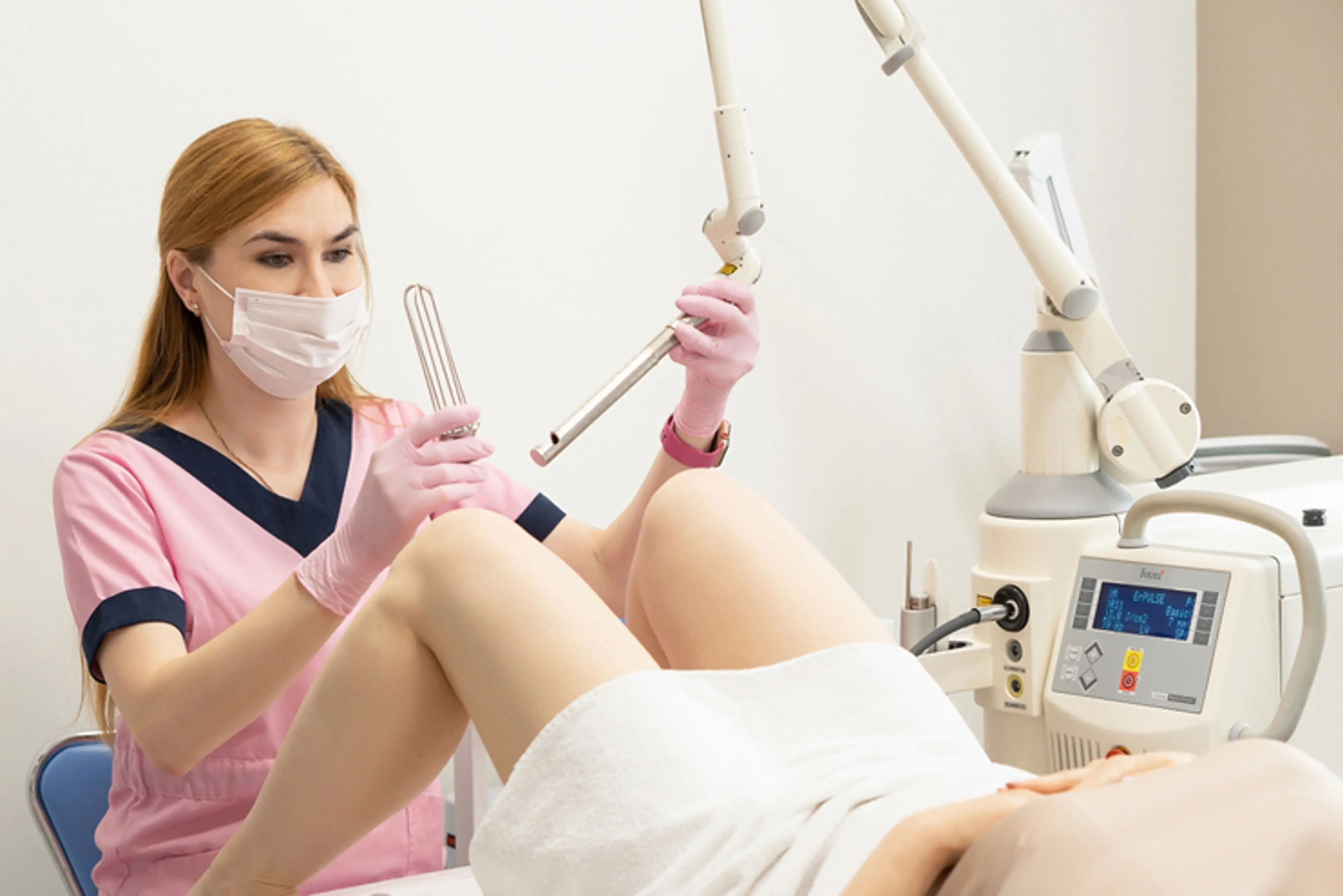
Energy-based devices like lasers and RF were designed to repair and re-strengthen the vaginal tissue without surgery, downtime, or anesthesia. But because they work differently, results can vary.
Feature | Vaginal Laser | RF Tightening |
|---|---|---|
Primary Effect | Mucosal regeneration & collagen remodeling | Deep heating of connective tissue & collagen tightening |
Best For | Dryness, mild laxity, atrophy, sensitivity issues | Mild–moderate laxity, looseness, tone, elasticity |
Depth of Action | Superficial to mid-layer mucosa | Deeper connective tissue & collagen matrix |
Discomfort Level | Slight warmth or tingling | Very gentle warmth |
Downtime | Usually none | None |
Visible Results | Gradual improvement | Often felt faster |
And this brings us to the essential question.
From our clinical experience at Juyeon Women’s Clinic — after more than 10,000 energy-based procedures — the answer is:
but lasers often create deeper long-term tissue improvement.**
Here’s why.
To be honest, this is the reason RF feels so satisfying for women who want quick reassurance. It’s not a dramatic change, but it’s noticeable — and that matters emotionally.
Women often describe it as:
“a more supported feeling”
“better grip during intimacy”
“less loosening when moving or exercising”
Laser technology works more like resurfacing and rejuvenation. It targets the mucosa — the soft, delicate lining of the vaginal canal — stimulating:
collagen regeneration
improved moisture retention
better elasticity
healthier, thicker tissue
The improvement often feels more “internal,” such as:
restored natural lubrication
reduced dryness or irritation
enhanced sensitivity
better tissue resilience during intimacy
These changes tend to be more biologically transformative, but not as instantly obvious as RF’s immediate tightening.
Most women report:
noticeable tightening within days
improved sensation
better friction during intercourse
less air entrapment
a firmer, more lifted feel
Women usually describe:
more natural lubrication
reduced dryness or burning
healthier, thicker tissue
more responsiveness
improved elasticity over time
A single session can offer noticeable tightening and improved tone.
Especially for women with dryness, atrophy, or menopause-related thinning.
This is what we recommend most often at Juyeon Women’s Clinic.
RF + Laser together create:
immediate tightening
long-term collagen remodeling
improved moisture and comfort
enhanced sensitivity
better tissue thickness and resilience
Many women say the combination feels “more natural” and “more complete” compared to using only one modality.
Tissue laxity can come from mucosal thinning, collagen weakness, pelvic floor dysfunction, or even hormonal imbalance. The right treatment depends on the root cause.
Women often think it’s laxity when the issue is actually mucosal thinning or atrophy — a laser is more suitable in this case.
Postpartum laxity often responds well to RF first, followed by laser for tissue recovery.
Hormonal changes drastically influence outcomes. A quick hormone assessment can improve treatment precision.
Most women describe RF as:
warm
calming
almost spa-like
Laser feels:
warm with a light prickling
slightly more stimulating
still very comfortable
Neither requires anesthesia or downtime.
noticeable improvement after 1 session
best results after 2–3 sessions
improvement after 1–2 sessions
optimal results with 3 sessions
often 2–3 sessions total
sessions spaced 3–5 weeks apart
For women 3–6 months after childbirth:
RF helps restore tone more quickly
Laser restores moisture and tissue health
The combination treats both tightness and sensitivity
Women often say this approach feels like “getting their body back.”
For women experiencing hormonal decline (often starting around 38–45 in Korean women):
Laser is particularly impactful for dryness and thinning
RF adds structural support
Hormone assessment enhances results
Many women feel relief after just 1–2 sessions, especially if dryness has been a long-term concern.
At our Gangnam clinic, Dr. Sojin Yeo evaluates:
vaginal tissue thickness
mucosal moisture
collagen density
postpartum or hormonal changes
pelvic floor status
sexual discomfort
long-term goals (tightness vs. moisture vs. sensitivity)
This allows us to choose:
But the real-world best outcomes come from choosing the method that matches your body’s needs — sometimes laser, sometimes RF, often a combination.
If you’ve been experiencing looseness, dryness, reduced sensitivity, or simply want to understand what your options are, you’re always welcome to have a private consultation.
At Juyeon Women’s Clinic in Gangnam, we take a gentle, personalized approach that considers both the medical and emotional sides of feminine wellness.
You deserve comfort, confidence, and a treatment plan that truly understands your body — and we’re here to support you every step of the way.